
Why Visit Đurđevac
Đurđevac is a beautiful city located in northeastern Croatia, and it belongs to the Koprivnica-Križevci County in terms of administrative divisions. There are many reasons why you should visit it, some of which are: The main attraction of the city – Đurđevac Old Town, which is the symbol of the city and has a rich history.
Then, the Legend of the Roosters – a legend that is revived every year through a manifestation and rich accompanying programs. By visiting the city of Đurđevac, you will have the opportunity to get to know the rich tradition and culture of the region. Regarding gastronomy in Đurđevac, you will taste excellent local dishes made from fresh, local ingredients.
Wine tourism – the region around Đurđevac is known for vineyards and wine production, and you can visit nearby wineries. We must not forget about the Đurđevac Sands, a geological phenomenon that is unique in Croatia. Additionally, we also have a safari in Đurđevac where we can enjoy the company of camels.
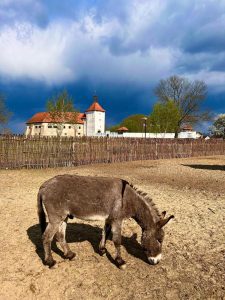
Photo by: Mirta Kožar
Things to do in Đurđevac
Đurđevački Pijesci
You can enjoy visiting and exploring Đurđevački Pijesci. Đurđevački Pijesci is a protected botanical area with a unique habitat containing a large number of endemic species, unique flora and fauna, and visible forms of sand dunes.
It covers an area of about 20 hectares, and part of it has been declared a special geobotanical reserve, recognized as a distinctive and unique habitat in Croatia, with the intention of preserving the uniqueness of the vegetation, where only certain plant species could develop and adapt to the sandy conditions of life.
In addition to endemic species, remnants of sand dunes are also visible. One of the names for Đurđevački Pijesci is “Krvavi peski” (Bloody Sands). They were formed by sediment deposition from glaciers, and until the end of the 19th century, they were still “living” sands.
Alongside endemic grass associations such as Trinia glauca and Arenaria arenaria, the entomofauna also includes a distinct group of about thirty butterfly species that only appear on these sandy soils.
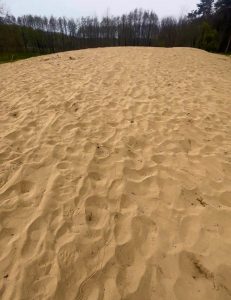
Photo by: Mirta Kožar
Visitor Center
The Đurđevački Pijesci Visitor Center presents visitors with a multimedia experience in an indoor space, showcasing all the unique features of the desert landscape and the richness of the diversity of animal and plant life that exists on the sands, regardless of the season and weather conditions.
There, you can learn more about the history of the city itself, see how people used to dress and live, and even touch the stones and sand that are significant to the city of Đurđevac. In the visitor center, you will learn in a naturally fun and interesting way and leave with great photos that will serve as beautiful memories of your visit to Đurđevac.
The visitor center is located in the very center of the city of Đurđevac, close to other attractions that you can visit in this small town.
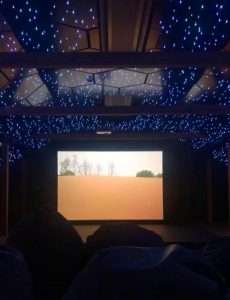
Photo by: Mirta Kožar
Đurđevac Mini Zoo
In the center of Đurđevac, next to the Old Town fortress, you will find the Mini Zoo. The Mini Zoo is home to about 50 animals. Currently, Đurđevac has 6 camels. Đurđica, Dina, Tomica, and Romeo have won many hearts with their friendliness and charm, and they are frequent guests on numerous national TV shows.
In addition to the camels, the small zoo is also home to playful pygmy goats, sheep, horses, donkeys, indigenous poultry, and llamas. There are plans to open a Podravian Oasis that will house many other native animals adapted for interaction with children.
In this small zoo, you can feed the animals, take photos, and learn some interesting facts about them.
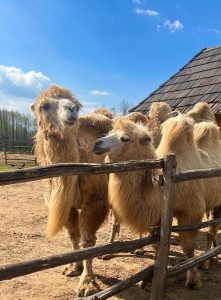
Photo by: Mirta Kožar
Old Town Fortress
The Old Town Fortress is a unique medieval fortification and the most significant part of Đurđevac’s cultural heritage. Every year, in front of the Old Town Fortress, the “Picokijada” takes place, the highlight of which is a theatrical reenactment of the historical Turkish attack on the Đurđevac fortress.
Inside the museum space, you will find the Interpretation Center of Picokijada, where exhibits of ethno heritage, interactive installations such as the depiction of the theatrical spectacle “The Legend of Picokima,” and many other interesting facts related to the Đurđevac region await you.
The fortress was of great importance in the mid-16th century during the Ottoman invasion. Legend has it that the mighty Ottoman army under Ulama-beg besieged the people of Đurđevac trapped in the Old Town, intending to starve them into surrender.
According to the legend, the defenders of Đurđevac outsmarted him by following the advice of an old woman and fired the last remaining food, a rooster – “picok,” from a cannon into the Turkish camp.
Ulama-beg fell for the illusion of abundance and, believing there was still plenty of food, left Đurđevac, leaving the townspeople with the name “Picok” as his curse, which has remained to this day. The fortress was once surrounded by a swamp, which served as its natural protection, and it belongs to the Wasserburg type of fortification.
Its construction began in the 14th century and was subsequently expanded according to the needs over the centuries. The additional defense was provided by ramparts, creating an outer courtyard, the remains of which are still visible today.
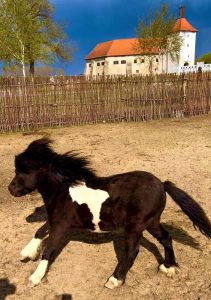
Photo by: Mirta Kožar
Museums
Đurđevac City Museum
The museum is located in the Old Town Fortress, a cultural monument of the Republic of Croatia. It is associated with the “Legend of Picokima,” an oral tradition based on a historical event from the time of Turkish conquests in the 16th century.
The first floor of the fortress houses gallery spaces for exhibitions, while the attic showcases a representative permanent exhibition of paintings by Croatian artists from the late 19th and 20th centuries, including a part of the rich Donation of Ivan Lacković Croata.
Throughout the year, around 12 exhibitions, art workshops, lectures, and concerts are held. The museum also has a parking lot and is located right next to cafes and restaurants, which is an advantage for visitors.
The museum regularly features exhibitions by renowned international artists. For example, exhibitions of Picasso, Salvador Dali, and other lesser-known artists have been held in the museum.
Adventure and Sports
If you are a fitness and gym enthusiast, Đurđevac has two gyms: Ultimate Gym and iGYM. If you enjoy swimming, there are pools at the Picok Hotel where you can also buy a daily pass. Đurđevac also has well-equipped tennis courts, and you can rent a bicycle to explore the city and its surroundings by cycling in nature.
Nature
Borik
The “Borik” Forest is a hundred-year-old pine and acacia forest with a network of pathways and a well-maintained fitness trail. This sports and recreational area is ideal for walking, running, cycling, and sports training.
You can take a walk along the educational trail in the forest, which also features 18 informative and educational benches that provide information about the formation and value of the Đurđevac Sands, the richness of flora and fauna residing in this geobotanical reserve, as well as the coexistence of humans and sand.
The trail through the forest and the beginning of the fitness trail are connected by a wooden promenade that links the Old Town Fortress, Hrvatska Sahara, and the Đurđevac Sands Visitor Center.
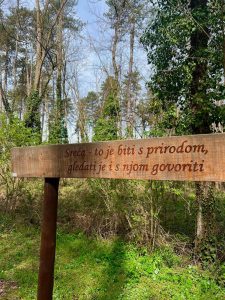
Photo by: Mirta Kožar
Bilogora
In the Đurđevac Podravina region, recreational enthusiasts can enjoy cycling on the Bilogora and Bilodrava routes (gravel and lightly trafficked asphalt roads), which encompass everything that Bilogora has to offer:
dense forested areas, picturesque village of Sveti Ana with its watermill and thematic trails, rural landscapes of the villages Mićetinac and Čepelovac, the cultural and historical gem – Barnagor Manor, numerous wineries along the wine route, and beautiful viewpoints.
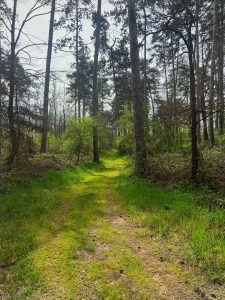
Photo by: Mirta Kožar
Drava River
The Drava River, with its branches, sandbars, wet meadows, steep and eroded banks, and backwaters, is one of the last preserved lowland rivers in Europe, featuring exceptional biological and landscape diversity, rare and endangered species (such as the white-tailed eagle, black stork, little egret, etc.), diverse avifauna and ichthyofauna, as well as rich geological and cultural-traditional heritage.
Fishing in untouched nature, birdwatching (waterbirds, marsh birds, songbirds, birds of prey, etc.), photosafari in a preserved habitat for numerous reptiles, amphibians, and mammals (deer, wild boars, otters, beavers, etc.), swimming on sandy beaches or gravel bars, gold panning, boat trips, and cycling along the Drava, Bilodrava, and Prekodrava routes are just some of the activities that nature lovers will find captivating.
Events
Picokijada
If you happen to be in Đurđevac at the end of June, you will have the opportunity to enjoy the main event. Every year, at the end of June, a traditional tourist event takes place in commemoration of the legendary defense of Đurđevac against the Turkish attacks.
Visitors to Picokijada have the chance to experience tradition, culture, customs, and revived history, taste traditional Podravian cuisine, and witness the hospitality of the region.
The central part of the event is the spectacle “Legend of the Picoks,” which brings to life the legendary historical victory over the Turks through impressive stage performances, audiovisual elements, and fireworks.
Knight camps and presentations of medieval way of life, craft fairs, exceptional gastronomic offerings and culinary competitions, festivals of intangible cultural heritage, arranged carriages depicting traditional and peasant life that no longer exists, exhibitions, and entertaining performances are just a part of the rich and diverse program of Picokijada.
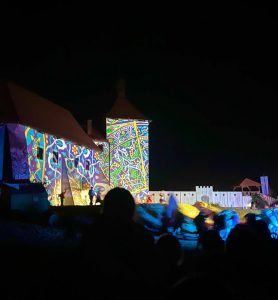
Photo by: Mirta Kožar
Where to Stay in Đurđevac
There are several accommodation options in Đurđevac, depending on your preferences and budget. Here are a few options:
- Hotels – Đurđevac has a four-star hotel called Hotel Picok.
- Hostel – Hostel Borik is a cheaper alternative to hotels and is also located in the center of Đurđevac.
- Apartments – On Booking.com, you can find numerous apartments with different designs.
Is Đurđevac expensive?
Đurđevac is a very affordable town, especially when compared to larger cities in continental Croatia. Of course, how much money you spend in Đurđevac also depends on you. Đurđevac will be more expensive for you if you prefer staying in a hotel, for example. Most of the attractions have symbolic entrance fees, and the natural beauty you can enjoy is, of course, free.
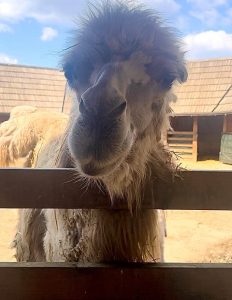
Photo by: Mirta Kožar
Cafes, Night clubs, and Bars in Đurđevac
Đurđevac doesn’t have many options for nightlife, but there are still places where you can enjoy a good cup of coffee or have fun at night.
Cafes:
- Z Caffe – A cozy café in the center, modernly furnished. If you decide to have coffee alone and you’re a book lover, there are some novels available for reading.
- Caffe bar Kaktus – A popular cafe on the main square known for its outdoor terrace and live music.
Night clubs:
- Night Bar Koogla – A night club located within a hotel, where you can sometimes listen to live music or popular hits played by a DJ.
Food and Restaurants in Đurđevac
In Đurđevac, you have several places to taste local specialties to suit all tastes and budgets. Popular places for lunch and dinner in Đurđevac include:
- Restaurant and Pivnica Stari Grad – Located inside the Stari Grad fortress, a traditional Croatian restaurant serving dishes such as lamb stew and veal cutlets.
- Zebra – A pizzeria where you can enjoy excellent pizza and other dishes.
- Picasso – A restaurant on the square where you can eat meals prepared with local and fresh ingredients at an affordable price.
Public Transportation in Đurđevac:
Đurđevac is a small town that you can easily navigate on foot or by car. For those who enjoy biking, Đurđevac has 15 electric bicycles available for rent.
Parking in Đurđevac:
You won’t have any problems with parking in Đurđevac. Many places, restaurants, cafes, and attractions have free parking. Only a few locations in the city have paid parking spaces, which cost 0.30 EUR per hour, while the daily ticket is 2.70 EUR.
Đurđevac History
Đurđevac (correctly spelled Đurđevec) has been mentioned since 1237. In the 15th century, it developed into a town settlement and market town. In the 16th century, it became the seat of the Đurđevac Captaincy, and in the 18th century, it was temporarily the seat of the Đurđevac Regiment.
Today, it is a small town and the center of the Đurđevac region in Podravina. In 1532, Suleiman the Magnificent returned to Istanbul after a failure at Kiseg. He passed through Podravina and plundered the Đurđevac area. A defensive wall was built around the Đurđevac castle, an area was fenced in front of the entrance tower, and smaller defense towers were built at the ends of the walls.
Between the towers, there is an entrance bridge, and from that bridge, across a wide marshland belt, there is a long oak bridge leading to the inhabited area. At that time, the owner of the town was the last member of the Ernušt family, Gašpar.
After Gašpar’s death, the property and fortress, after political turmoil, came into the hands of King Ferdinand I, who entrusted Đurđevac, as well as the fortresses of Koprivnica and Prodavić (Virje), to Captain Luka Sekelj for the organization of defense in Podravina.
Due to the relatively poor condition of the fortress, repairs were carried out and the fortress was prepared for the then-modern methods of warfare. In 1552, Virovitica was surrendered to Ulama-bey on August 2nd. A rapid attack followed towards the West, but Ulama-bey failed to capture Prodavić (the fortress in Virje).
On August 8th, he launched a major assault on Đurđevac. After 1632, significant Ottoman invasions into Podravina ceased, the population grew, and the fortress successfully fulfilled its historical role of defense.
When we talk about the history of the city of Đurđevac, we cannot ignore the Legend of the Picoki. The story, based on historical events from the time of the Ottoman conquests in the mid-16th century, has survived through oral tradition and is associated with the Stari Grad fortress in Đurđevac, dating back to the 14th century.
Thanks to the cunning of an old woman, at her suggestion, the defenders of the city fired a rooster – “picok” from a cannon, which led the Ottomans to believe that there was an abundance of food in the fortress.
This was the reason they lifted the siege and moved on, giving the people of the city the name Picoki, a name that Đurđevac residents proudly bear to this day. The oldest recorded manuscript of the Legend dates back to 1898 and was written according to the basis of collecting and studying folk materials on folk life by Antun Radić.
It was written by Tomo Jalžabetić, a farmer and politician, the initiator of peasant cooperatives and the leader of the Croatian Peasant Party in Đurđevac and Podravina.